Electric vehicle manufacturers face significant challenges as market demand grows globally. Integrating complex electronic systems within limited space, managing heat from high-power components, and ensuring reliable operation across extreme conditions require solutions beyond conventional circuit boards.
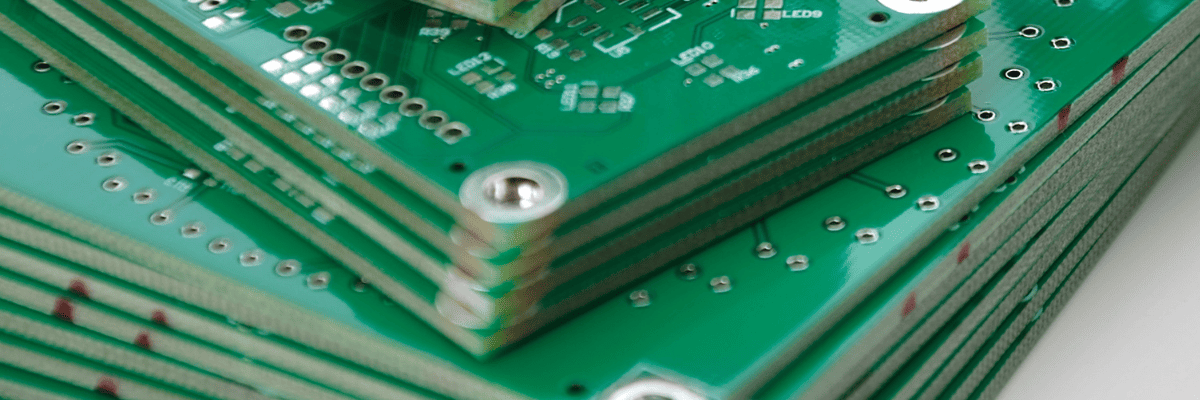
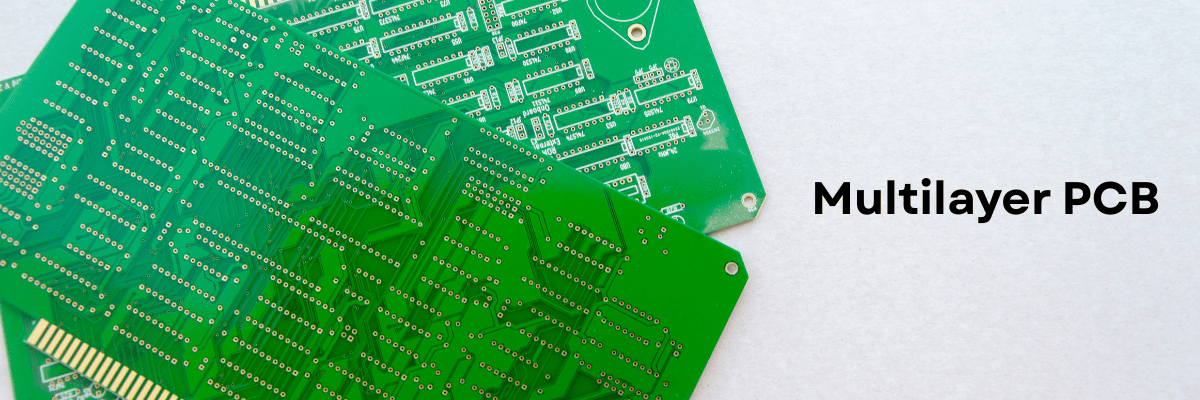
Multilayer PCBs are transforming how manufacturers tackle these issues, offering compact designs that accommodate sophisticated electronics without compromising performance or safety. These advanced boards stack multiple conductive layers within a single assembly, enabling efficient power distribution, superior signal integrity, and effective thermal management, which traditional options cannot match. This post explores the scope of multilayer PCB technology in EV applications, industrial applications of electric vehicles, key design considerations for automotive-grade PCBs, and future trends in EV PCB technology.
Scope of Multilayer PCB Technology in Electric Vehicle Applications
The global electric vehicle (EV) market was valued at USD 713.93 billion in 2024 and is projected to reach USD 2,131.89 billion by 2032, at a CAGR of 13.2% during the forecast period. This rapid growth in EV adoption reflects the automotive industry’s shift toward electrification, driven by increasing environmental awareness and government policies.
As the demand for EVs rises, technologies such as multilayer PCBs become crucial for modern automotive electronics. Their layered design allows for complex routing patterns, enabling compact and efficient circuit boards that are essential for the space-constrained environments in vehicles.
- Enhanced Circuit Density: Multiple layers allow engineers to integrate many components and connections within smaller areas, creating compact electronic assemblies that fit efficiently into limited vehicle spaces while maintaining full functionality.
- Superior Signal Integrity: Dedicated power and ground planes within these boards minimize electromagnetic interference between signal traces, ensuring reliable data transmission across communication networks that connect various vehicle systems and sensors.
- Effective Thermal Management: Strategic copper distribution and thermal vias help dissipate heat from high-power components, protecting sensitive electronics from temperature-related failures while maintaining consistent performance during extended operation under demanding conditions.
- Complex Routing Capabilities: Engineers can create intricate connection patterns across different layers, reducing the need for external wiring and connectors while simplifying system architecture, which improves reliability and reduces assembly complexity.
- Improved Mechanical Stability: The laminated construction offers excellent dimensional stability and resistance to vibration, crucial factors for automotive applications where boards face constant movement, temperature fluctuations, and mechanical stress during vehicle operation.
Industrial Applications of Multilayer PCBs in Electric Vehicles
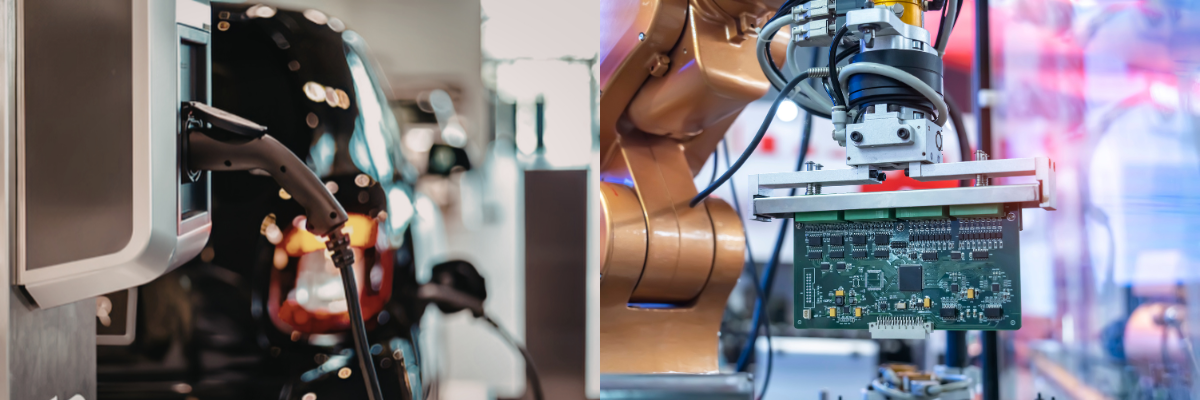
Electric vehicles incorporate advanced electronic systems that control virtually every operational aspect, from power delivery to safety features. Multilayer PCBs enable these complex systems to function reliably under demanding conditions.
- Battery Management Systems: These systems continuously monitor cell voltages, temperatures, and charge states across battery packs, requiring multilayer PCBs that process multiple sensor inputs while executing precise control algorithms for optimal performance.
- Power Electronics: Inverters and converters transform DC battery power into AC for motor operation, demanding multilayer PCBs that can handle substantial current loads while maintaining efficiency, minimizing losses, and ensuring reliable operation throughout the vehicle’s lifespan.
- Driver Assistance Systems: Modern safety features, such as collision avoidance, lane departure warnings, and adaptive cruise control, rely on multilayer PCBs that process sensor data in real time, enabling split-second decisions to enhance vehicle safety.
- Infotainment Systems: Vehicle entertainment, navigation, and connectivity features rely on multilayer PCBs designed for high-speed data processing, enabling seamless wireless communication and responsive user interfaces.
- Charging Infrastructure: Onboard chargers use multilayer PCBs to manage power conversion, communicate with external charging stations, and monitor safety parameters, ensuring efficient energy transfer and protecting battery health during various charging scenarios.
- Motor Controllers: Multilayer PCBs regulate torque delivery, speed control, and regenerative braking in electric motors, optimizing energy efficiency and providing smooth acceleration and deceleration characteristics.
Key Design Considerations for Automotive-Grade Multilayer PCBs
Designing multilayer PCBs for electric vehicles requires careful attention to factors that ensure reliable operation throughout the vehicle’s lifespan. These considerations impact performance, durability, and long-term reliability.
- Material Selection: For automotive-grade multilayer PCBs, materials such as FR4, polyimide, and ceramic substrates are commonly used. These materials provide durability and reliability across temperature extremes, moisture resistance, and mechanical strength, are essential for the harsh conditions found in automotive environments.
- Layer Configuration: Proper arrangement of signal, power, and ground planes minimizes electromagnetic interference while controlling impedance characteristics, ensuring clean signal transmission and preventing crosstalk between adjacent traces.
- Thermal Design Strategy: Effective heat dissipation through strategic component placement, thermal vias, and copper pours prevents overheating of sensitive components, maintaining performance and preventing premature failures caused by excessive heat buildup.
- Via Technology: Selecting appropriate via types (through-hole, blind, or buried) based on signal requirements and layer count impacts board density, manufacturing complexity, and reliability while influencing production costs.
- Testing Protocols: Comprehensive testing, including thermal cycling, vibration exposure, and humidity resistance, validates board performance under conditions that mimic actual vehicle operation, identifying potential weaknesses before deployment.
Future Trends and Innovations in EV PCB Technology
The electric vehicle sector is driving continuous innovation in multilayer PCB technology, shaping the future of automotive electronics with improved performance, integration, and reliability.
- Increased Layer Counts: The trend involves high-density interconnect (HDI) technology and via-in-pad techniques, enabling multilayer boards to support more layers while maintaining compact sizes. These methods facilitate the complexity required in modern electric vehicles’ electronic systems.
- Advanced Substrate Materials: Materials such as ceramic substrates, liquid crystal polymer (LCP), and high-frequency laminates are increasingly used in automotive PCBs. These materials provide superior thermal conductivity, lower signal loss, and high mechanical strength to handle high-power automotive applications under extreme conditions.
- Embedded Components: Integrating passive and active components directly within board layers reduces size, improves electrical performance, and enhances reliability by eliminating traditional solder joints that represent potential failure points under vibration.
- High-Speed Communications: Boards designed with gigabit Ethernet and fiber-optic communication support high-speed data transfer. These technologies optimize signal integrity and minimize degradation, ensuring seamless connectivity for autonomous sensors, infotainment, and other advanced vehicle systems.
- Sustainable Manufacturing: Environmental considerations are driving the adoption of eco-friendly processes, recyclable materials, and energy-efficient production techniques that reduce manufacturing impact without compromising performance or reliability.
- Miniaturization Technologies: Finer trace widths, smaller via sizes, and tighter component spacing enable more compact designs, allowing for more functionality within constrained spaces and meeting the automotive industry’s demands for lighter, more efficient vehicles.
Partner With Rigiflex Technology for Your Multilayer PCB Needs
At Rigiflex Technology, we specialize in multilayer PCB solutions specifically engineered for automotive and electric vehicle applications. Our experienced team supports your projects by delivering high-quality boards that meet exact specifications from concept to production. For project discussions or requirements, contact us at (714) 688-1500 or email pcboards@rigiflex.com.
FAQs:
What makes multilayer PCBs different from standard circuit boards used in conventional vehicles?
Multilayer PCBs contain multiple conductive layers separated by insulating materials, allowing for higher component density and better signal integrity compared to simpler boards used in traditional vehicles.
Are multilayer PCBs more expensive than traditional automotive circuit boards?
Initial costs are higher, but they reduce overall system expenses by eliminating multiple separate boards, connectors, and wiring, while improving reliability and reducing warranty claims over vehicle lifetime.
How do multilayer PCBs handle electromagnetic interference in electric vehicles?
Multiple ground planes and strategic layer arrangement shield sensitive signals from interference generated by high-power electronics, ensuring reliable operation of communication systems and preventing false sensor readings.
Can multilayer PCBs be repaired if they fail in electric vehicles?
Individual component replacement is possible, but complete board replacement is typically more practical and reliable due to the complex internal layer structure and difficulty accessing buried connections within multilayer constructions.
How do multilayer PCBs support vehicle-to-vehicle communication systems?
They provide high-frequency signal routing and antenna integration capabilities necessary for wireless communication technologies, enabling vehicles to exchange information with other vehicles and infrastructure for improved safety.
What advantages do multilayer PCBs offer for regenerative braking systems?
These boards efficiently handle rapid power flow reversals during regenerative braking, managing energy recovery while ensuring smooth transitions between acceleration, coasting, and braking modes without compromising system stability.