A Complete Guide to Determining Flexible PCB Thickness for Engineers and Designers

Flexible printed circuit boards (flex PCBs) are widely used in applications where space savings, lightweight construction, and mechanical flexibility are essential. From wearable devices and medical equipment to aerospace and industrial systems, flex circuits provide compact and reliable interconnect solutions that rigid PCBs cannot easily achieve. One of the most important design considerations in a
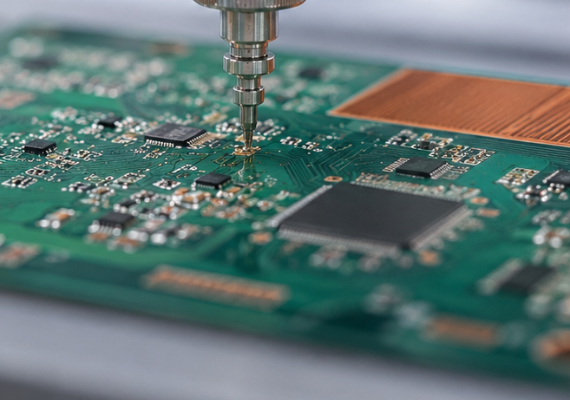
HDI flex PCB manufacturing process for aerospace

Building Aerospace Reliability: How HDI Flex PCBs Are Manufactured for Extreme Environments

Aerospace environments introduce harsh operating conditions, including continuous vibration, extreme temperature swings ranging from sub-zero conditions to high heat, radiation exposure in space, and long operational lifetimes without maintenance access. Electronic reliability is non-negotiable in such conditions. HDI flex PCBs support these demands by enabling high-density routing, compact multilayer structures, and stable signal performance in

Flex PCB Materials Guide: Complete Selection Guide for Performance and Reliability

In flex circuit engineering, materials are not simply construction elements, they are performance drivers. The right combination of flex PCB materials can improve bend life, support signal integrity, withstand harsh environments, and extend product reliability, while the wrong choices can introduce fatigue, delamination, or premature failure. For engineers and OEMs, understanding flex PCB material types

Exploring the Role of Multilayer PCBs in the Growing EV Market

Electric vehicle manufacturers face significant challenges as market demand grows globally. Integrating complex electronic systems within limited space, managing heat from high-power components, and ensuring reliable operation across extreme conditions require solutions beyond conventional circuit boards. Multilayer PCBs are transforming how manufacturers tackle these issues, offering compact designs that accommodate sophisticated electronics without compromising performance

Benefits of Multilayer PCBs: Solving the Impossible Demands of Modern Electronics

As technology continues to evolve at an unprecedented pace, the demand for smaller, faster, and more reliable electronic devices is just as high. From smartphones and wearables to electric vehicles and medical devices, modern electronics are becoming increasingly compact while pushing the boundaries of performance. This surge in demand has driven innovations in printed circuit

Conformal Coatings in PCB Manufacturing: Types, Benefits, and Applications

When it comes to creating printed circuit boards (PCBs), reliability is paramount. A PCB must be durable and function in various environments without failure. One of the best ways to ensure longevity and reliability is by applying a conformal coating. This thin layer of protective material shields the PCB from external factors like moisture, dust,

A Complete Guide to PCB Inspection Methods: AOI, X-Ray, ICT and More

PCB inspection is the fundamental quality control process that determines the electrical integrity and physical reliability of printed circuit boards before they reach end applications. Modern electronic devices demand exceptional precision, making inspection protocols essential for identifying defects such as soldering irregularities, component misplacement, and structural imperfections that could lead to catastrophic system failures. Quality

How to Select the Best PCB Surface Finish for Your Project

The performance and longevity of a PCB are not solely determined by its design and components; the surface finish also plays a critical role in ensuring its reliability and functionality. The surface finish of a PCB affects its solderability, durability, and resistance to environmental factors, which helps maintain optimal performance throughout the life of the

High-Frequency Challenges: How 5G is Reshaping PCB Material Selection

As the world shifts toward faster, more connected, and data-heavy environments, 5G technology is rapidly emerging as a cornerstone of next-generation communication systems. With its promise of ultra-low latency, lightning-fast data speeds, and support for massive device connectivity, 5G is not just transforming how we communicate but also redefining how the hardware behind these systems

Environmental Benefits of Flexible PCBs Over Traditional Rigid PCBs

As electronics continue to shrink and evolve, the demand for flexible boards has increased owing to the need for bendability. Also, the environmental impact of the components that power these boards has gained importance. Traditional rigid PCBs, while effective in terms of structural stability, contribute to energy consumption during manufacturing and may contain materials such

How PWB and PCB Collaborate for Cutting-Edge Devices?

The continuous technological evolution over the last few decades has led to the development of compact, high-speed, and performance-driven electronic devices. Printed circuit boards serve as the backbone of these devices, and their advancements have enabled increased functionalities, miniaturization, complex circuit layouts, improved signal integrity, optimized power distribution, and more. All of this is essential

Common PCB Testing Mistakes and Their Proven Solutions

Inspection and testing are crucial steps in the PCB production and assembly process, and are performed at almost every stage. This ensures reliability, performance, and longevity of the assembly and in turn the final product before it’s market launch. However, even the most experienced technicians and manufacturers can make costly mistakes, resulting in defective boards,

How Rapid Prototyping PCB is Revolutionizing PCB Manufacturing in Terms of Growth?

Rapid prototyping in PCB manufacturing has emerged as an innovative approach, enabling engineers and designers to create functional prototypes at an accelerated pace. This technique leverages advanced technologies such as 3D printing, CNC machining, and laser processing to produce high-quality PCB assemblies in significantly reduced timelines. The main purpose of rapid prototyping is to streamline

Thermoformed Flex PCBs: A Complete Guide to Design, Fabrication, and Applications in Advanced Electronics

As technology evolves, the demand for innovative and flexible electronics is growing across industries, including automotive, healthcare, and consumer products. These sectors often need circuits that feature increased flexibility, better thermal stability, and improved electrical performance, handle frequent bending, and withstand harsh application environments. This is where thermoformed flex PCBs come in—an advanced solution that

How to Effectively Reduce Your PCB Assembly Costs?

Printed circuit board (PCB) assembly is critical step in manufacturing electronic devices.  The manufacturing and assembly costs of PCBs can vary widely based on several factors. Understanding these factors is essential. The cost varies based on design elements like board size, layers, components, surface finishes, and production speed. There are also hidden costs, such as

PCB Assembly – Key Certifications and Standards Explained

Printed circuit boards (PCBs) are the backbone of electrical and electromechanical devices in electronics manufacturing. From smartphones to industrial machinery, all devices are driven by PCBs. Ensuring PCBs function safely and reliably in the respective application is crucial. This is where certifications and standards make a significant difference. Adhering to industry- recognized standards, such as

The Essential Role of Solder Mask in PCB Manufacturing

Soldering is a crucial process in electronics that involves joining components to a printed circuit board (PCB) using a fusible metal alloy called solder. This method ensures electrical connectivity and mechanical support for the components, contributing to a reliable and efficient electronic circuit. A solder mask, or solder resist, is a critical layer applied to

Embracing Eco-Friendly Practices in Green PCBs for a Sustainable Future

The electronics industry is undergoing a transformative shift towards sustainability, marked by the widespread adoption of green PCB technologies. This pivot to environmentally friendly manufacturing is basically changing the production processes of electronic devices, prioritizing ecological responsibility. Green PCBs have emerged as an ideal solution to the issues of electronic waste and hazardous substances typically

Fast-turnaround PCB production: cost-affecting factors and important selection criteria

Fast turn turn Printed Circuit Boards (PCBs) production follows a series of steps and streamlined processes, which allow manufacturers to boost their time-to-market capabilities and maintain a competitive edge. The earlier post discussed the benefits and steps involved in fast turnaround rigid flex PCB manufacturing; however, this post will delve into other things you must

The Ultimate Guide to Fast Turn PCB Manufacturing: Everything You Need to Know

Fast turn PCB manufacturing is a process where the manufacturer completes the assembling of printed circuit boards (PCBs) in a quick turnaround time to meet the demands of the marketplace. This process is traditionally and most commonly used for prototype PCBs and low-volume production. The PCBs under this category are designed, fabricated, assembled, and tested

7 PCB Manufacturing Trends in 2024 and Beyond

With the demand for miniature, high-speed, and performance-driven electronic devices, the requirement for complex and conventional PCBs has risen. Being an integral part of most electronic devices, these boards have positively impacted the industry and continue contributing to technological advancements and automation in different segments. This demands adequate research, innovation, and continuous development. These enhancements

The Challenges and Benefits of 5G Technology on PCB Design and Manufacturing

5G technology is revolutionizing the way we communicate and connect by promising faster speeds, lower latency, and greater connectivity. As the world becomes increasingly connected, 5G is expected to revolutionize several industries, including PCB the way is designed and manufactured. With the potential to completely transform the way PCBs are developed and integrated into devices,

A Complete Guide on Rigid PCB Manufacturing Capabilities

While flexible or rigid-flex PCBs are nowadays widely used for most applications, rigid PCBs still hold value and find application in specific segments where rigidity and structural stability are important. Rigid PCB manufacturing capabilities, for any player, depend on different factors, including the complexity of the design, components mounted on the board, number of possible

PCB Insulation – Importance and Materials Used Discussed

Printed circuit boards are an integral part of any electronic device. PCBs consist of conductive coating to transmit electricity, which makes them generate heat during the current flow. To protect printed circuit boards from excess heat generation, it is important to apply a layer of insulation, which is a non-conductive, dielectric material. PCB insulation provides