Flexible PCBs

Flexible PCBs

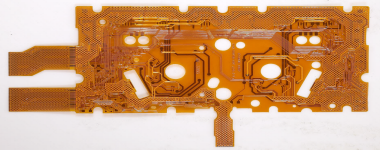
Rigiflex concentrate on creating the most advanced tools and technology in flexible printed circuit board manufacturing.

Rigid-Flex PCB

Rigid-Flex PCB

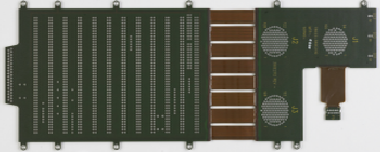
Rigiflex Technology is ITAR registered and manufactures Rigid-Flex PCB in compliance with all industry standards.

Rigid PCBs

Rigid PCBs

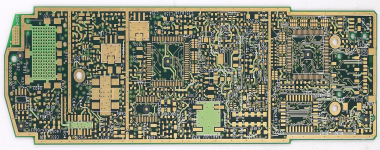
Rigiflex is one of the foremost companies in the design and manufacturing of rigid printed circuit boards.

Queries to Make When Choosing a Flex PCB Prototype Manufacturer

Most of today’s flex PCB manufacturing process begins with a prototype production. There are several advantages of building a working model of the flex circuit before attempting the mass producing of these boards. Building a prototype not only helps to test the board’s function but also aids in improving it as per the requirement. Additionally,

Rigid-flex PCB Manufacturing Process Simplified

Rigid-flex circuit boards feature both rigid and flexible components, hence the name. These hybrid printed circuit boards are widely used across various industries because they combine the best of both— rigid and flexible circuit boards. Although they have become an integral component of various electronics, their fabrication involves several complex steps. Do you want to

Why PCB Manufacturers Choose RF and Microwave PCBs for Networking Applications?

RF and Microwave PCBs have been around for several years and are most commonly used in the electronics industry. They are immensely popular and designed to operate on signals in the megahertz to gigahertz frequency ranges. When it comes to networking and communication applications, these PCBs are ideal. There are many reasons why PCB manufacturers

Your Guide to the Printed Circuit Board Market – Growth & Growth Factors

Printed circuit boards (PCBs) have become an integral part of the technology today. Since their first use, the demand for these circuit boards have only increased. Today, you cannot imagine technology without a PCB. The printed circuit board market has skyrocketed over the years, and it has no intention of slowing down in the future

Your Unconventional Guide to Selecting the Right Surface Finish for PCB

The surface finishes are important for a printed circuit board because they protect the board from oxidation. Along with making the boards resistant to corrosion, the surface finishes also help enhance the look of the PCBs. Different finishes have their own pros, cons, and uses. Are you intrigued to know these different types of finish

PCB Surface Finishes- Understanding the Basics

The demand for electronics and electronic products has been increasing unceasingly for quite some years. The graph of demand is consistently on rise as newer technologies are being introduced. This demand is driving the scope of the electronics industry, and more particularly, the printed circuit boards (PCBs). The copper layer present on the circuit boards,

Know the Applications of PCBs for the Medical Industry

The medical field is not the same as before. The advancement in technology has drastically revolutionized the industry. The change is more obvious in the electronic diagnostic, research and treatment systems and tools. Several sophisticated electronic devices/instruments are being launched day by day to ease various medical procedures. This growth is largely benefiting the PCB

Applications of PCBs in the Aerospace Industry

The demand for high-grade PCBs is on the rise for various applications in the aerospace industry. The industry needs PCBs of several configurations that are manufactured using varied materials and composites. However, considering the challenging nature of the industry, PCBs are assembled using extra durable materials. This is done to withstand extreme environmental conditions and

4 Most Commonly Used Materials in Networking and Communication PCBs

Be it any industry, printed circuit boards (PCBs) are making their presence felt in almost every application. The networking and communication applications are not an exception to this. These circuit boards help in making the communication, a hassle-free task. In these applications, printed circuit boards can be manufactured from different materials. What are these materials?

Why Did Rigiflex Technology Purchase the DI System from Technica USA?

Technology and quality are the two key factors that drive the success of any industry. For the printed circuit board (PCB) industry, these are extremely important factors that decide the fate of a supplier or manufacturer. One such technology that has been preferred by most PCB manufacturers is the direct imaging (DI) technology developed by

Important Questions on RoHS Compliance Answered

Electronics and electrical product industry is one of the main causes of environmental pollution. Thus, these industries are governed by several regulations imposed by governments in various countries. RoHS is one such compliance, which impacts the electrical and electronic industries. What is the compliance? How does it control the electronic industry? This post aims to

How Do FR4 & Polyimide Materials Differ From Each Other?

Different materials are used for manufacturing printed circuit boards (PCBs). The type of the material varies, based on the application for which the PCBs are to be used. Each material has its own properties, beneficial features, pros, cons, and capabilities, which determine their compatibility with the applications. Among the many materials that are used today,

Why Use FR-4 for Fabricating High-Tg PCBs?

Several applications require PCBs that withstand relatively high temperatures ranging from 200 °C, or more. To perform reliably in high-temperature applications, we need specialized PCBs that are fabricated using performance-driven materials. This blog aims to familiarize you with one such specialized PCBs namely, High-Tg. These PCBs can handle extreme PCB glass transition-temperature, whilst offering the

A Double Sided MCPCB and a Double Layer MCPCB – What are the Differences?

Metal core printed circuit boards are suitable alternatives for FR4/CEM1-3 variants. Also, referred as MCPCBs, these circuit boards use metal as a core base material. These PCBs are differentiated on the basis of their construction. Single layer, double layer, double sided, and multi –layer PCBs are a few types. The double layer and double sided