Flexible PCBs

Flexible PCBs

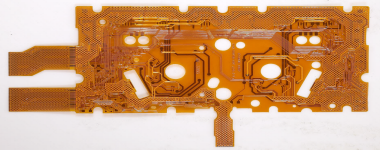
Rigiflex concentrate on creating the most advanced tools and technology in flexible printed circuit board manufacturing.

Rigid-Flex PCB

Rigid-Flex PCB

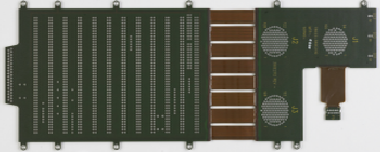
Rigiflex Technology is ITAR registered and manufactures Rigid-Flex PCB in compliance with all industry standards.

Rigid PCBs

Rigid PCBs

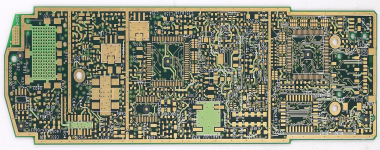
Rigiflex is one of the foremost companies in the design and manufacturing of rigid printed circuit boards.

Enabling Heat Dissipation in 12 Layer Rigid-Flex PCBs with Heat Sinks

The continual design and manufacturing of complex, solution driven devices for many industrial applications has increased the importance of rigid-flex Printed Circuit Boards (PCBs). As the demands for improved electronics has increased, so has the demand for improved PCB performance. They need to be designed with multiple layers to work with complex electronic equipment, be

What are the Benefits of Flex Circuit Boards over Traditional PCBs?

Flexible printed circuit board is a kind of PCB designed to suit the needs of flexible electronic circuits. Flexible printed circuits were initially designed as an alternative to traditional wire harnesses. From their first application during the Second World War to the present, flex circuit boards have improved exponentially. A flexible printed circuit is produced

Why PCB Manufacturers Choose Flying Probe for Testing Rigid Flex Circuit Boards

The testing processes for rigid flex circuit boards can be extremely challenging. This is because these circuits are designed as extremely thin, and with complicated geometries. So it is not surprising that certain hurdles can be faced during the testing processes. To thoroughly test the circuit board, many PCB manufacturers choose the Flying Probe test.

Understanding the 4 Major PCB Laminate Types

The PCB lamination process begins with the selection of suitable materials. Choosing the right laminate is crucial as it determines stability, lower loss, and optimum performance of the final assembly. Several laminate options are available to support the assembly of printed circuit boards. This blog familiarizes you with the four commonly used PCB laminate materials.

The Basics of PCB Lamination Process

A Printed Circuit Board (PCB) is a structure used to connect and support electronic components. PCBs have conductive pathways through which different components are connected across the board. These pathways are etched from copper sheets. To ensure that the copper layer does not conduct a signal or current, it is laminated into a substrate. Types

Solving the Problems of PCB Design Transitions

PCB prototyping is an essential part of the flexible printed circuit board production process. It can be done for two production processes – domestic and offshore. Designing the PCB for a single production process is relatively simple. However, with globalization and company diversification, products can also be manufactured by an offshore supplier. So, what happens

The Two Main Base Materials Used in the Manufacture of Flex Circuit Boards

A base material has several crucial roles to perform in a flex circuit board. The material is responsible to electrically insulate conductive circuit tracks from one another. It also provides the circuit with flexing strength and durability. When it comes to manufacturing flex circuit boards, there are several base material options available. However, choosing the

Commonly Used Surface Finishes for Automotive PCBs

Printed Circuit Boards (PCBs) form the foundation of modern automotive electronic circuit. They are inevitable for making reliable interconnections. They support the assembly of electronic ignition systems, transmission control units, electronic lamp driving, navigation systems, and many others in a vehicle. When manufacturing and assembling PCBs for automotive electronics, there are several factors to be

Must Know Terms When Stipulating Material Specifications for 12 Layer PCBs

Several material options are available to customize 12 layer PCB boards. These include, different kinds of conductive materials, adhesives, coating materials, among others. When stipulating material specifications for 12 layer PCBs, you may find your manufacturers using numerous technical terms. You must be in a position to understand commonly used terms to smoothen the communication

IPC Recommendations on PCB Material Selection

The Institute of Printed Circuit Boards (IPC), has proposed certain recommendations and guidelines to design, manufacture, and inspect Printed Circuit Boards (PCBs). IPC certification is only awarded to PCBs, which comply with IPC safety standards. PCBs with the certification offer a guarantee of outstanding quality, unfailing performance under stressful environments, and long lasting service life.

PCBs for Consumer and Home Appliances

Over the years, there have been drastic changes in the design and manufacture of consumer products and home appliances. Today’s consumer products are characterized by complicated electronics, which in turn call for intricately designed PCBs. To meet the growing demands of PCBs, today’s manufacturers maintain a rich inventory of ready-to-order PCBs. Also, they offer the

Military and Aerospace PCB Design

Military and aerospace PCBs are often subjected to hostile environmental conditions, including elevated/fluctuating temperatures, extreme humidity, and moisture, among others. Moreover, they are frequently exposed to harsh chemicals, hydrocarbon solutions, dust, and other contaminants. Only the PCBs assembled with the best quality materials built by utilizing the right manufacturing methods will survive adverse conditions in

Five Common Problems Associated with Flexible PCB Assembly – Part II

In the previous post, we covered the common solder-related problems that could occur during PCB assembly. As a consumer, you should be aware of these problems. This will be especially helpful when working with complex designs like 8 layer rigid polyimide PCBs. With this information on hand, you can check if the manufacturer has managed

Advancements in the PCB Industry Fuel the Growth of Electronic Adhesive Market, according to Market Reports

The electronic adhesive industry is growing day by day at a faster rate. It has been noted that, continual growth of the PCB industry contributes largely to the developments in the electronic adhesive industry. This is because, production of small to large PCB boards requires electronic adhesives of several kinds to bond different components reliably.

Two Surface Finishing Methods that Protect Copper of 8 Layer Rigid-Flex PCBs

As the name implies, 8 layer rigid-flex PCBs are manufactured with 8 conductive copper layers. If these copper layers are left unprotected, they started deteriorating leaving PCBs useless. Hence, in order to withstand the test of time, PCB manufacturers use reliable surface finishes to expand the service period of these crucial components. Amongst the several

PCBs Used for Various Devices and Applications

PCBs are used across several industries. They are amongst the inevitable components used in all the electrical and electronic devices. Applications of PCBs are innumerable as they are easily available and provide quick assembly of modern electronic circuits. Application Areas of PCBs The increasing miniaturization of integrated circuits, higher packing density and smaller layout-dimensions call